Category: Power Wheelchair
Posted by 2025-12-29 11:12
hoyer lift gait belt
Guidelines for the Coordinated Use of Hoyer Lift and Gait Belt: A Dual Safety Assurance Strategy
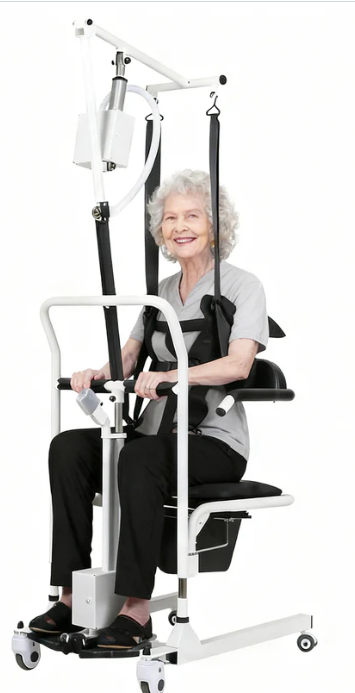
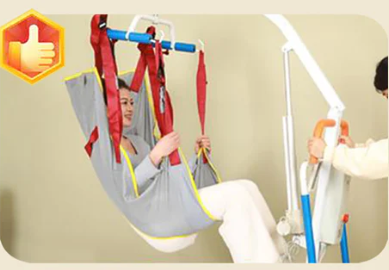
In patient transfer care, the combined use of a Hoyer Lift and a gait belt represents the highest level of safety standards. hoyer lift gait belt The synergy between these two devices not only enhances safety but also provides additional confidence for both caregivers and care recipients.
Understanding Device Synergy
Functional Complementarity
Hoyer Lift: Provides the primary mechanical lifting force.
Gait Belt: Serves as a manual assistance and stabilization tool.
Dual Protection: If one device encounters an accident, the other acts as a backup safeguard.
Progressive Transition: Helps users move from full dependence to partial independence in transfers.
Advantages in Applicable Scenarios
The training phase for first-time Hoyer Lift users.
When users experience fear or anxiety.
Situations requiring precise postural adjustments.
Complex transfer processes for floor rescue.
Gait Belt Selection Guide
Material Characteristic Analysis
Nylon: High strength and durability, but average comfort.
Cotton: Soft and comfortable, but limited load-bearing capacity.
Blended Materials: Ideal choice for balancing strength and comfort.
Antibacterial Treatment: An important feature in medical environments.
Design Feature Considerations
Width: Typically 10–15 cm, providing sufficient support area.
Length: Should wrap around the waist with room for adjustment.
Buckle: Quick-release buckle for rapid removal in emergencies.
Handles: Multiple handles for gripping at different angles.
Safety Specification Standards
Load Capacity: Clearly marked maximum load limit (usually 150–200 kg).
Strength Testing: Complies with relevant safety standards for medical equipment.
Quality Certification: Certified by medical device regulatory authorities.
Service Life: Understand the replacement cycle under normal use.
Standard Operating Procedure for Coordinated Use
Preparation Phase
Explain to the user the purpose and process of dual protection.
Assist the user in wearing the gait belt, hoyer lift gait belt ensuring proper placement (at the narrowest part of the waist).
Check the belt’s tightness (2–3 fingers should fit between the belt and the waist).
Position the Hoyer Lift sling according to standard procedures.
Lifting Phase
The caregiver grips the gait belt with one hand and stabilizes the user with the other.
Start lifting the Hoyer Lift slowly.
Fine-tune the user’s posture via the gait belt to maintain an upright position.
Continuously monitor the user’s reactions and comfort level.
Transfer Phase
The caregiver guides the transfer direction using the gait belt.
Keep pace with the Hoyer Lift’s movement speed.
Prevent the user from swinging or rotating.
Be ready to provide support via the gait belt at any time.
Lowering Phase
Pause briefly before the user touches the target surface.
Use the gait belt to assist with final precise positioning.
Remove the Hoyer Lift sling only after confirming the user is in a stable sitting position.
Finally, remove the gait belt.
Handling Strategies for Special Situations
Anxious or Fearful Users
Explain the "intimate protection" provided by the gait belt.
Allow the user to hold the belt to increase their sense of control.
Convey a sense of security through the tactile feedback of the belt.
Conduct progressive training based on trust-building.
Users with Asymmetric Body Posture or Hemiplegia
Provide additional support on the weaker side.
Guide the user to maintain a neutral body alignment via the belt.
Prevent accidental leaning toward the affected side.
Assist in achieving symmetric postural adjustments.
Users with Communication Barriers
Use the traction force of the belt for non-verbal communication.
Closely observe feedback from the user through body language.
Establish a simple and clear signaling system.
Rely more on thorough environmental preparation in advance.
Safety Standards and Risk Control
Absolute Contraindications
Using a gait belt alone for full-weight-bearing transfers.
Using a worn or damaged gait belt.
Placing the belt incorrectly on the chest or abdomen.
Putting hard or sharp objects under the belt.
Equipment Inspection Key Points
Check the belt’s integrity and buckle function before each use.
Regularly inspect for stitch wear and material aging.
Ensure the Hoyer Lift sling does not entangle with the gait belt.
Confirm neither device restricts the user’s breathing.
Emergency Preparation Plan
Familiarize yourself with the gait belt’s quick-release mechanism.
Develop an emergency plan for equipment malfunctions.
Ensure caregivers know how to manage both devices simultaneously.
Conduct regular emergency drills.
Advanced Techniques and Professional Applications
Posture Management Techniques
Use the gait belt for minor postural adjustments.
Assist in balance training for center-of-gravity transfer.
Maintain the ideal posture during Hoyer Lift elevation.
Help with the transitional phase of sitting-to-standing transfers.
Rehabilitation Training Integration
Serve as a transitional tool toward independent transfers.
Conduct functional training under the guidance of a physical therapist.
Gradually reduce reliance on the Hoyer Lift.
Establish a progressive plan for building confidence and ability.
Multi-Caregiver Collaboration
Clarify each caregiver’s grip position on the gait belt.
Establish a unified command and coordination system.
Assign responsibilities for monitoring equipment and the user.
Develop clear verbal commands and response procedures.
Equipment Maintenance and Replacement Standards
Daily Maintenance Procedures
Clean and disinfect after each use.
Check for visible signs of wear.
Test all buckles and adjustment functions.
Store properly to avoid direct sunlight.
Regular In-Depth Inspection
Conduct load-bearing tests monthly.
Check stitch strength and uniformity.
Evaluate changes in material elasticity and softness.
Perform coordinated testing with the Hoyer Lift.
Replacement Criteria
Any signs of tearing or cutting.
Loose or broken stitches.
Unreliable or damaged buckles.
Significant hardening or loss of elasticity in the material.
Conclusion
The coordinated use of a Hoyer Lift and a gait belt represents the gold standard for patient transfer safety. hoyer lift gait belt This combination not only provides physical dual protection but, more importantly, builds psychological safety for both caregivers and care recipients. Through professional skills, appropriate equipment, and attentive practice, every transfer can be a safe, comfortable, and respectful experience. Remember, in care work, the best technology is the prevention of accidents—and the dual protection strategy is the perfect embodiment of this concept.